Anna Schmidt · 2 September 2026
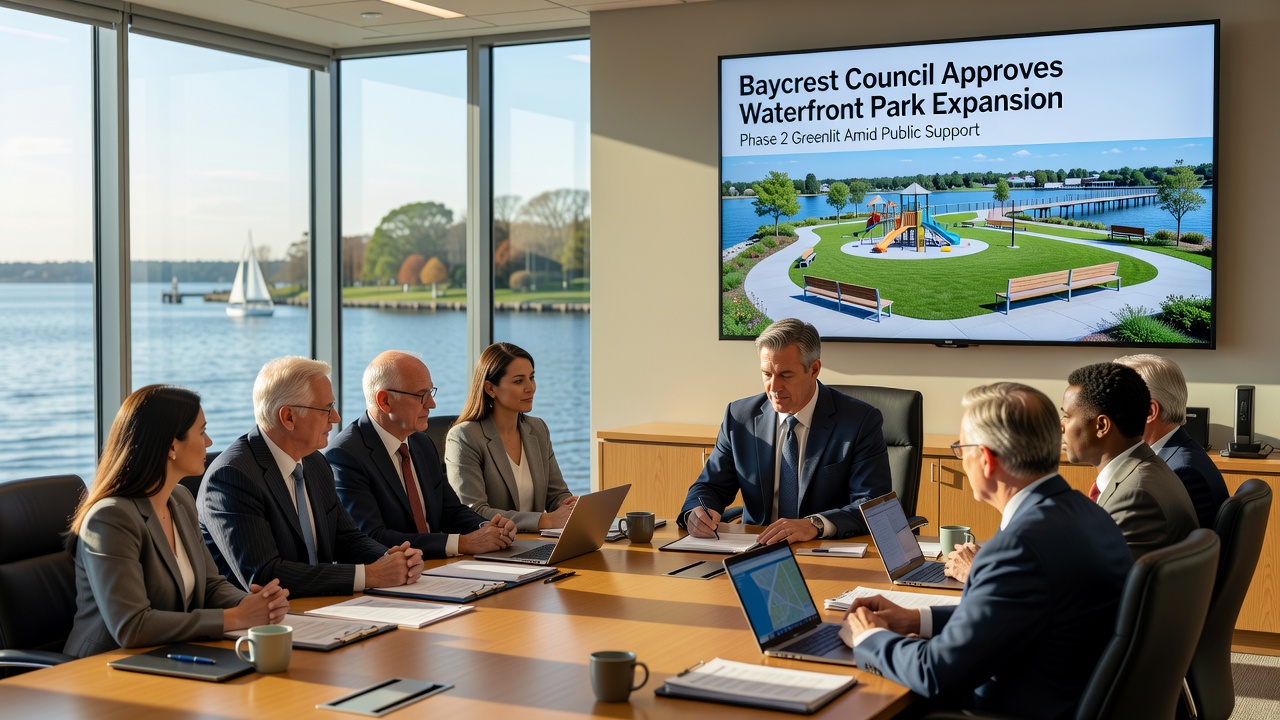
The Baycrest City Council unanimously approved the expansion of the waterfront park during its regular meeting on Tuesday evening. The 7-0 vote followed months of public consultations, environmental reviews, and planning sessions focused on enhancing recreational access along the bay. Council members emphasized the project's role in addressing population growth and promoting outdoor activity for all ages. Funding details and timelines were presented by the parks department, highlighting broad community backing from recent surveys showing over 80 percent resident approval.
Project Scope and Funding
The approved expansion will add 18 acres of new space featuring extended walking and biking trails, a modern playground, picnic shelters, a dog park, and improved shoreline access points. The $4.8 million budget draws from municipal reserves, state environmental grants, and private contributions. Construction is slated to begin in April 2025 with completion expected by September 2026. Designs incorporate native plantings, wetland protections, and solar lighting to minimize ecological impact while adding parking and event areas. University experts assisted with biodiversity planning, and phased development will allow continued public use during building. Additional elements include local art installations and educational kiosks on the bay ecosystem.
Impact on Local Community
Residents will gain expanded opportunities for exercise, family gatherings, school programs, and senior activities once the project finishes. The upgrades are projected to support mental health through greater nature access and stimulate local businesses via increased tourism. Mayor Thompson noted the park will serve as a sustainable centerpiece aligning with city green goals. Environmental groups praised conservation zones, while traffic concerns were addressed with new access routes. The council allocated ongoing maintenance funds and scheduled public forums for programming input. This approval reflects Baycrest priorities for balanced urban growth and community well-being.